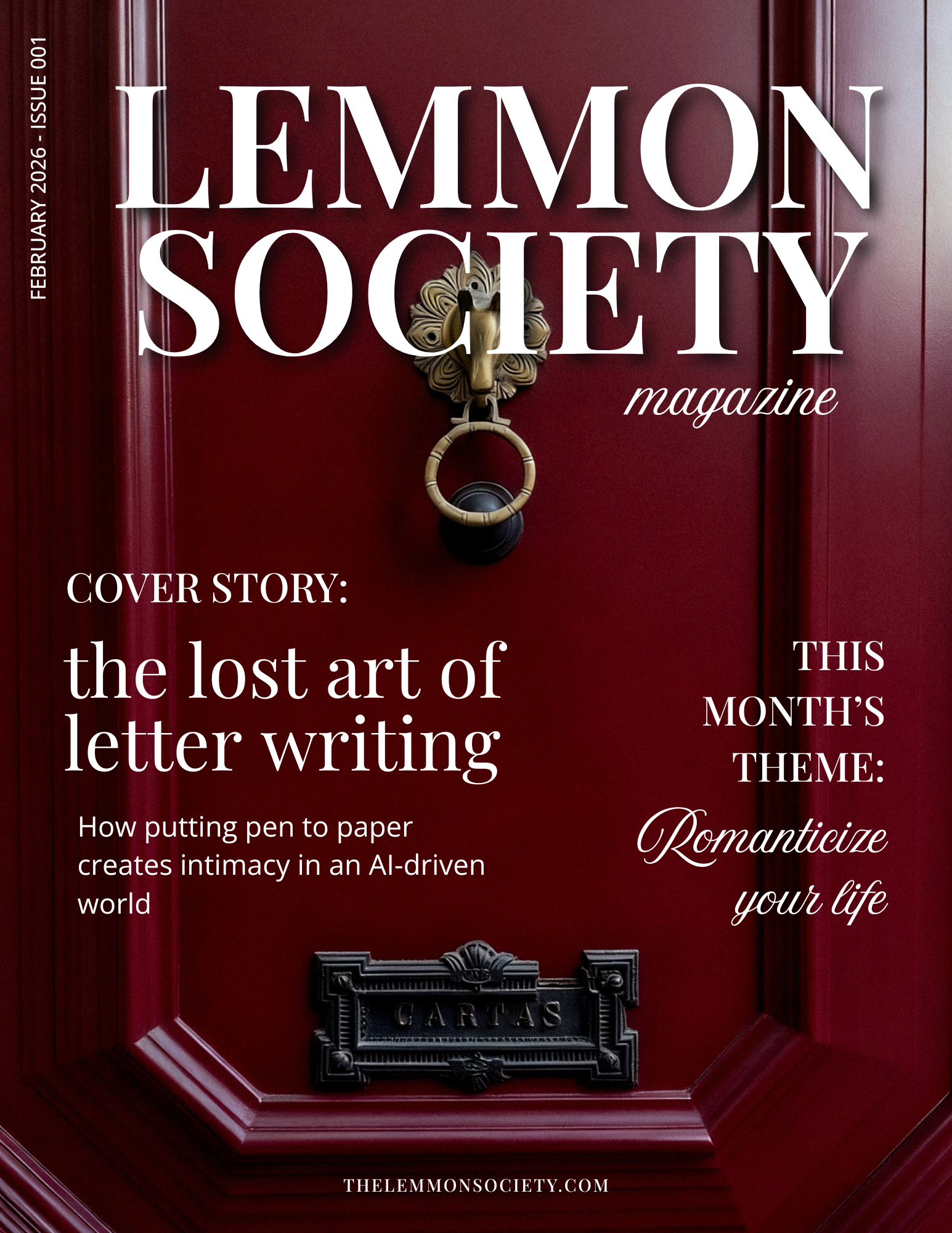
Lemmon Society Magazine •Issue 001•
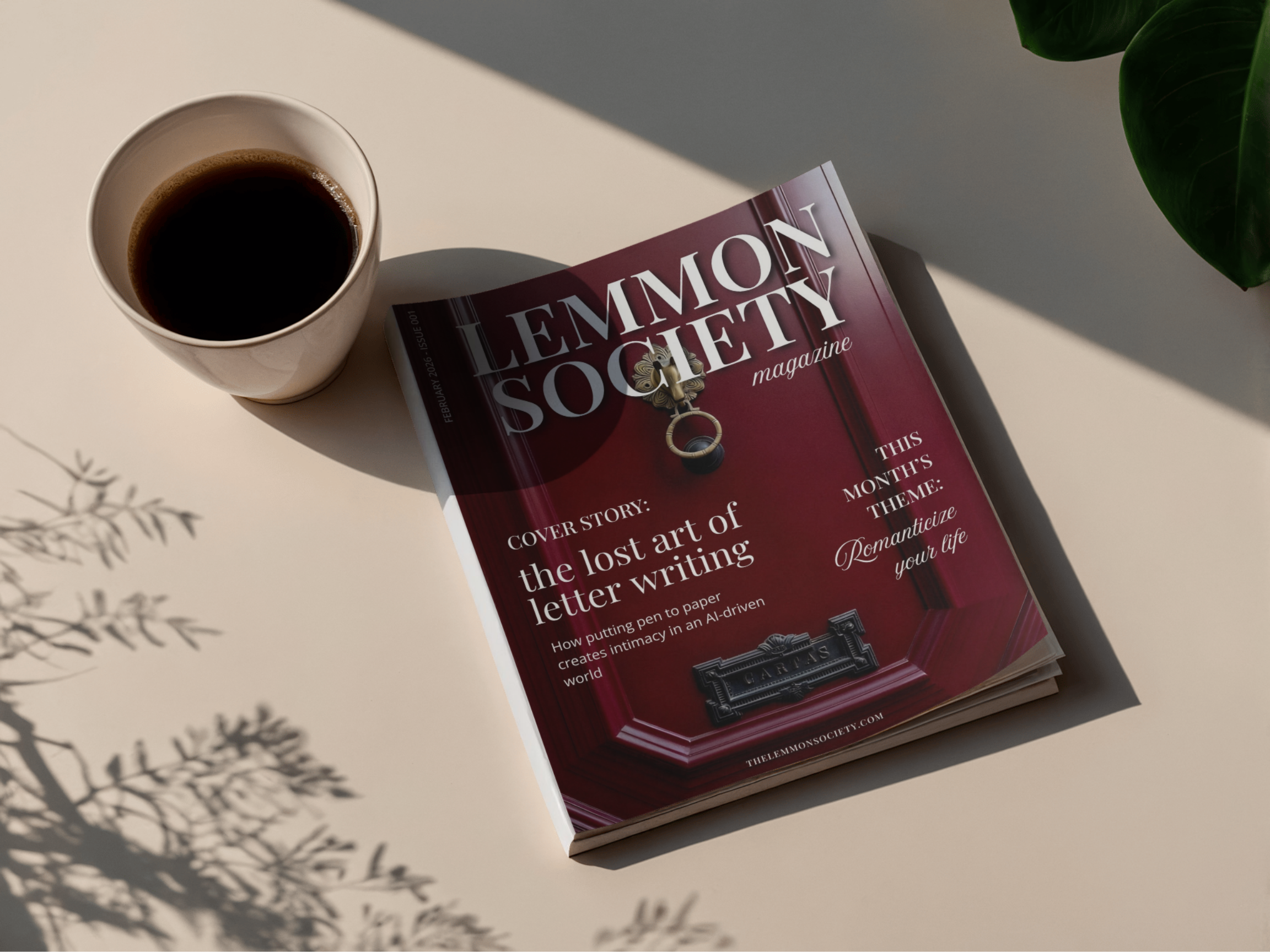
February 2026 - Issue 001
From the Editor
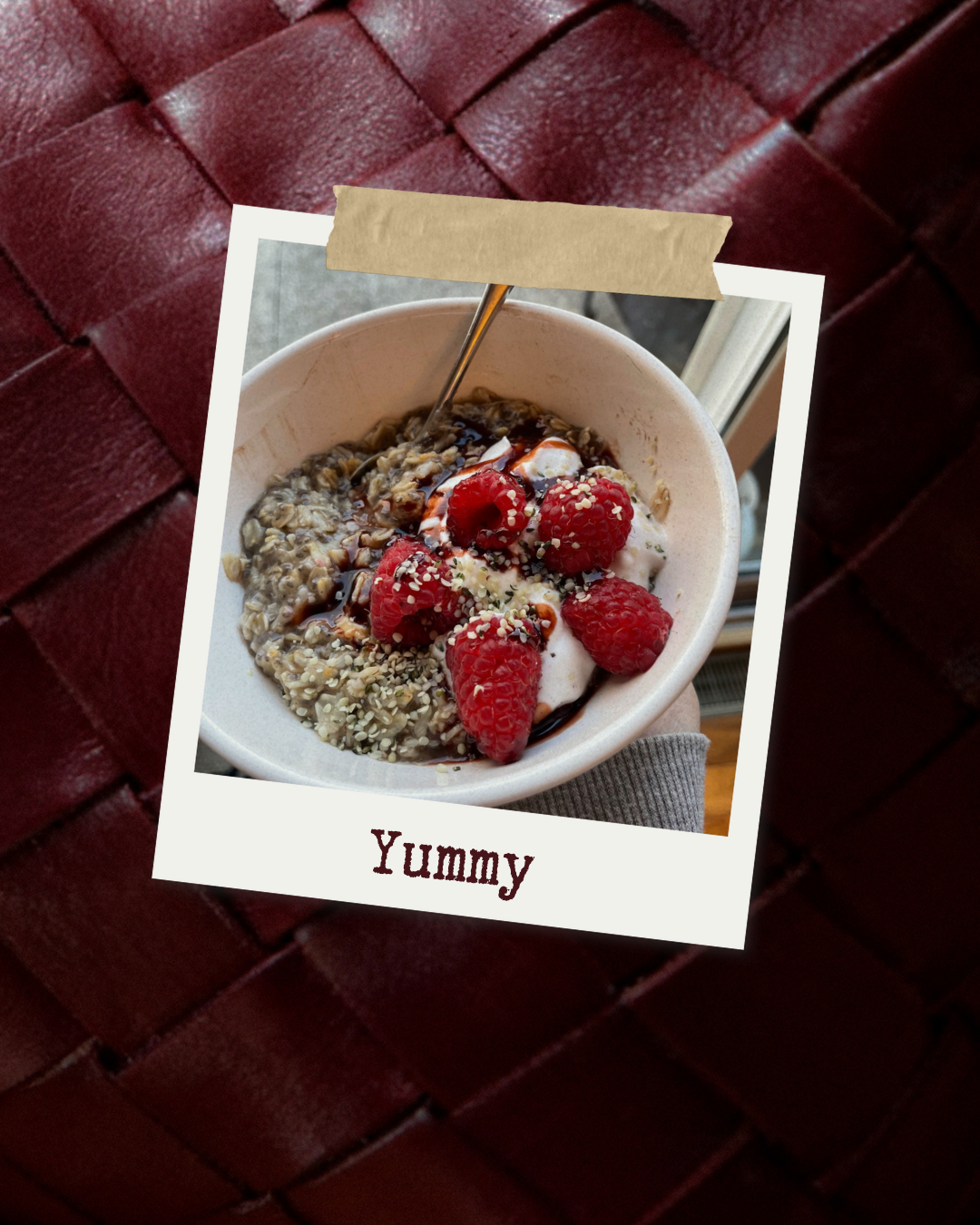
My oatmeal breakfast was a true work of art.
Welcome to Issue 001 of Lemmon Society Magazine! I am so thrilled to introduce this to you, I can’t even explain. This month, we are focusing on the theme of Romanticizing Your Life, a theme I’ve been playing with online for a few weeks now. So what is Romanticizing Your Life? Well, not to be cliche, but it’s the little things.
I realized I practice this in lots of ways in my life, from that final sprinkle of hemp seeds on my oatmeal bowl, to turning on twinkle lights in my office to decorating my planner pages with whimsical stickers.
Romanticizing life is about slowing down and giving attention to what matters, which is why our cover feature is The Lost Art of Letter Writing.
It’s not about beating AI (there’s no competition), but instead about allowing AI to do what it does best, so that we can stop doing it all.
Each month, Lemmon Society magazine will share the full-length cover article, as well as reveal the featured content for the month. This featured content is available to all Lemmon Society members, and will unfold beautifully—sprinkled throughout the weeks to come. As a member, you can read, listen, watch, comment, and vibe in our private community.
I warmly invite you inside to experience more inside this incredible space.
Until next month, pour all the romance into your life that you can hold.
Jessica Lemmon
Editor, Lemmon Society Magazine
Book of the Month: A Story to Savor
One Valentine’s Day kiss turns best friends into lovers in the flirty first book in Jessica Lemmon’s Bachelor Pact series. Read more.
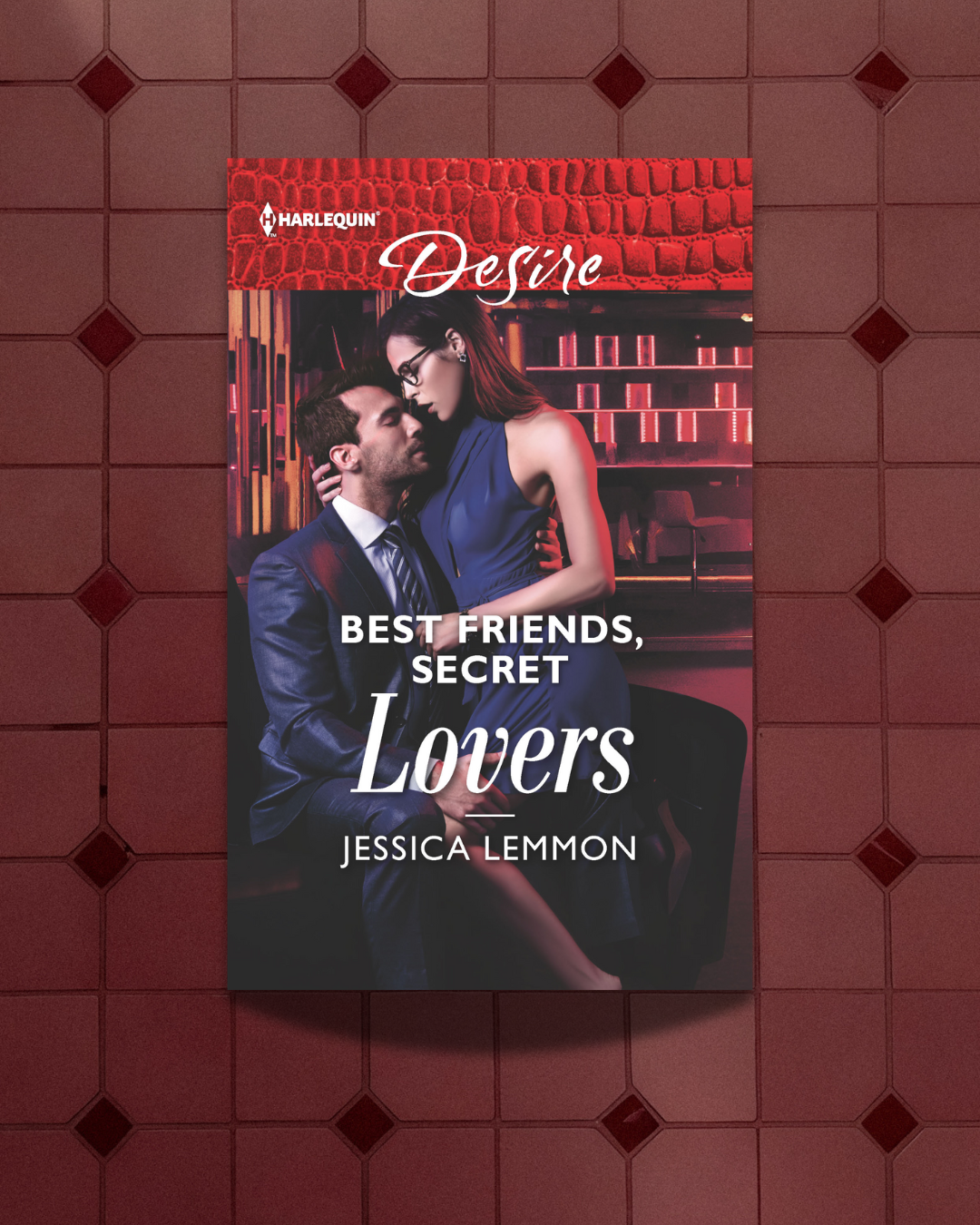
Best Friends, Secret Lovers is a spicy romance novel written by Jessica Lemmon.
Cover Story:The Lost Art of Letter Writing
How putting pen to paper creates intimacy in an AI-driven world
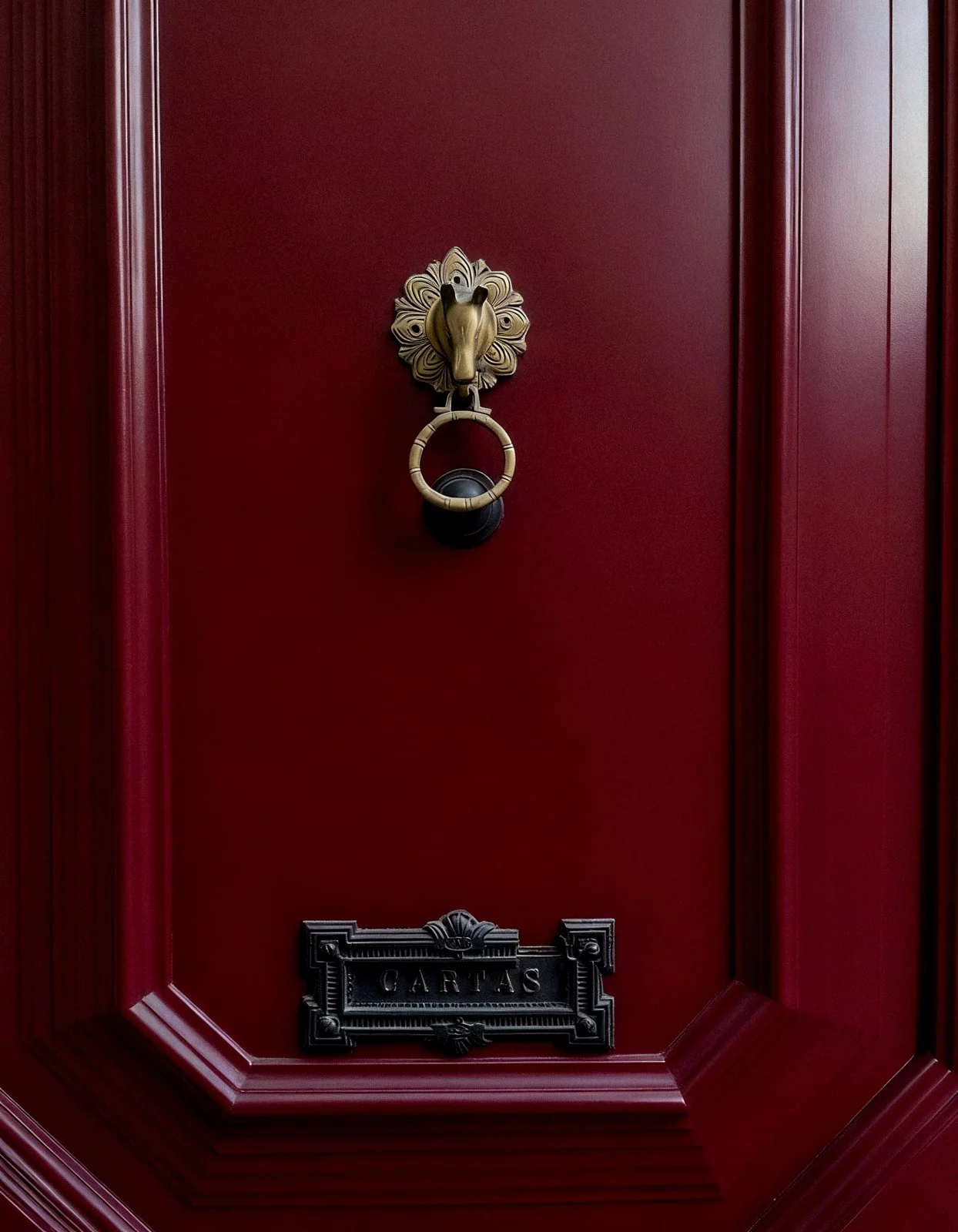
There was a time when being written to was a rare and precious thing.
A handwritten letter in your mailbox, formerly known as “correspondence,” arrived unannounced and to our giddy surprise. Now, even our mailboxes have a digital stamp, announced in our email inboxes so that we know what’s coming before it even arrives.
Go back to that time—in your memory or your imagination, depending on your age. A time when you felt the comforting weight of the hand-addressed envelope in your hand. Are there two folded sheets of paper in there, or three? Maybe you recognized the familiar curl or slant of the sender’s handwriting before you read the name of who sent it.
Was the person rushed, scribbling down the note, or did the sentences stretch out in careful penmanship that required the steady pressure of the pen? What was misspelled, abbreviated? What was underlined? Where did the ink smudge or pool?
More than a message, a letter carried a mood. A mood that had passed by the time you received the letter (days or weeks depending on the time it took to arrive to you). Opening that letter was opening the past. A time capsule. It was a peek at the sender’s recent history.
In an age where words are instant, endless, and increasingly generated by machines, putting pen to paper is becoming a radical act. This year, I sent five Christmas cards. I used to send fifty. I received two. What would it mean to pick up a pen and paper again in the age of AI? Would it make a lick of difference in our lived experiences, or simply gum up the works, drawing out the amount of time it takes to correspond when we could have sent an email that would have taken just a few minutes to execute?
When you write a letter, you force yourself to slow down.
When it comes to pen and paper, your hand can’t keep up with your thoughts, which forces your brain to slow down and patiently transcribe those words. You must stay with your train of thought as each word takes shape, and then remember the segue to the next topic. There is no Ctrl+Z or delete button. You can’t go back and insert a sentence before the one you last wrote. You may have to use an arrow, cross out a misspelled word, make a funny note in the margin that reads, “Is this how you spell occupy?” Perhaps best of all, there’s no machine predicting the words that will come next, allowing you ample space to use the word that came to you organically.
That slowness and intention creates intimacy. And that intimacy will come through on the page.
My Teacher, Mr. McNew
In my senior year of high school, my writing teacher cared deeply about expressing creativity through pen and paper. So much so, that one of our assignments was to purchase a notebook for the class, its sole purpose to write letters to him. The topics were our favorite authors, what we were reading or writing. I can’t remember much of what was written (except my mention of my favorite author at the time, Stephen King), but I do remember cherishing that process. It was freeing and fun to share my deeply personal thoughts on Pet Semetery. And to find out what his thoughts were when he returned the notebook with his handwritten response.
I recall most of all that I was using a recycled-paper notebook, its paper pulpy and soft. His fountain pen bled so badly he was forced to use a pedestrian ballpoint. (Oh, the humanity.) You can’t get that sort of tactile experience on a computer screen.
He must have had great dedication to his students to assign such a task. How many letters did he write each week? There were thirty of us in his class. How many classes did he have? Would a teacher take on such a commitment now, in this day and age? I don’t know. Maybe.
And maybe this is what handwritten letters, folded and tucked into addressed envelopes are really conveying. They say, “I thought about you. I took the time to write to you.” In an era where we rush everywhere and are constantly behind and overwhelmed, what a compliment to receive the product of someone’s precious time.
In an AI-driven world, where words can be generated in seconds, a handwritten letter becomes a form of devotion. Writing a letter to someone means choosing presence over convenience. Attention over efficiency. Intention over speed. And because of that, the receiver reacts differently to a letter than an email.
The “bing!” of our inbox is met with a groan, knowing we will have to sort, file, or handle whatever’s in there so that we don’t have to pay Google more money to keep our backlog. A letter, though. Oh, a letter. A letter is received with delight and surprise. And, if you’re like me, you tear it open on the short walk from the mailbox to the house.
The Verdict.
What’s the verdict for you? Will you begin writing handwritten correspondence instead of typing out an email? Will you send your friends paper birthday cards stuffed with a packet of tea or a stick of gum or pressed flowers? (After you make sure you have their snail-mail address, of course.) Or, are you a teacher who is implementing a similar challenge to your students—asking them to share their insights on what they’re reading, and carefully writing them back?
Or maybe, for you, it’s none of the above. Maybe you love beautiful stationery and envelopes, or handmade paper or greeting cards. Maybe you’re simply looking for an excuse to be more present in your life, and this article lit that spark.
This is your permission slip to do the thing that takes longer, is less efficient, and blessedly free of that curse of perfection. It doesn’t have to be the most incredible prose in the world, and if you spell occupy with one C instead of two, the receiver will likely forgive your typo.
The important takeaway is that you are spending time thinking of someone else and they are spending time reading what you wrote. In a way, it’s modern time travel. You, to the future when they will read your time-stamped words, and them, to the past, when they imagine you scribbling away at your kitchen table, a warm cup of tea steaming next to your elbow, a smile on your face and them on your mind.
It’s magic, really. And we could all use a bit more magic in our lives.
Especially now.
♡
Jessica Lemmon is a former job-hopper who resides in Ohio with her husband and rescue dogs. She holds a degree in graphic design currently gathering dust in an impressive frame. When she’s not writing emotionally-charged stories, she spends her time drawing, drinking coffee, and laughing with friends. Her motto is Read for Fun, and she believes we should all do more of what makes us happy. Learn more here.
How the Issue Unfolds This Month
This issue continues throughout the month inside The Lemmon Society, with additional features, reflection, and conversation. Learn more.
Current Members
Click a title below to jump straight to this month’s feature posts.
👇
STORY NOTES - This month inside Story Notes, you’ll read a love letter from one of my most unforgettable heroes, and the behind-the-scenes story of the book that changed everything for Jessica Lemmon as a writer—creatively and emotionally.
THE DROP - A private tarot reading that reveals the emotional and energetic themes shaping the rest of the month, personal guidance you won’t find anywhere else.
💌 Plus, our cover story in practice! A step-by-step letter-writing workshop about how to write a meaningful letter to someone you love.
BOOK CLUB - We’ll step inside our Book of the Month with a more intimate lens, exploring the romance, emotional tension, and visually rich manga format that brings this love story to life in a way words alone never could.
📝 P.S. If you’re a writer and would love to write our future cover story (and see your own book featured as a Book of the Month), you’ll find the contributor application here.
PEP TALKS - For our top tier (Fam) members, a private audio invitation to romanticize your one amazing, precious life, and reconnect with beauty and meaning once again.
LIVE CALL - A live Zoom gathering for our top-tier (Fam) members, devoted to romanticizing your work and your life. Our conversations revolve around craft and idenity, and the floor is always open for questions. Led by multi-published, bestselling author Jessica Lemmon.
*Members have access to a full catalog of past posts, exclusive stories, and more.