June 2026 Issue of Lemmon Society Magazine
From the Editor

Jessica Lemmon is a #1 Bestselling Author and Founder of The Lemmon Society.
Welcome to Issue 005 of Lemmon Society Magazine for Writers.
This online magazine is the free, public-facing preview of a membership called, aptly, The Lemmon Society, where writers take their writing progress seriously and show up to finish their books.
In our free-to-read cover story this month, I’m sharing how to guard your writing time—meaning we schedule it first rather than leave it for the leftover scraps of the day.
May these simple reminders be just what you need to hear to finally carve out the time to do your creative, precious work.
It matters.
You matter.
Happy writing,
Jessica Lemmon
Editor, Lemmon Society Magazine
To go deeper and learn how to Maximize Your Writing Time, come join us inside the membership and commit (or recommit!) to your manuscript.
Book Rec of the Month:
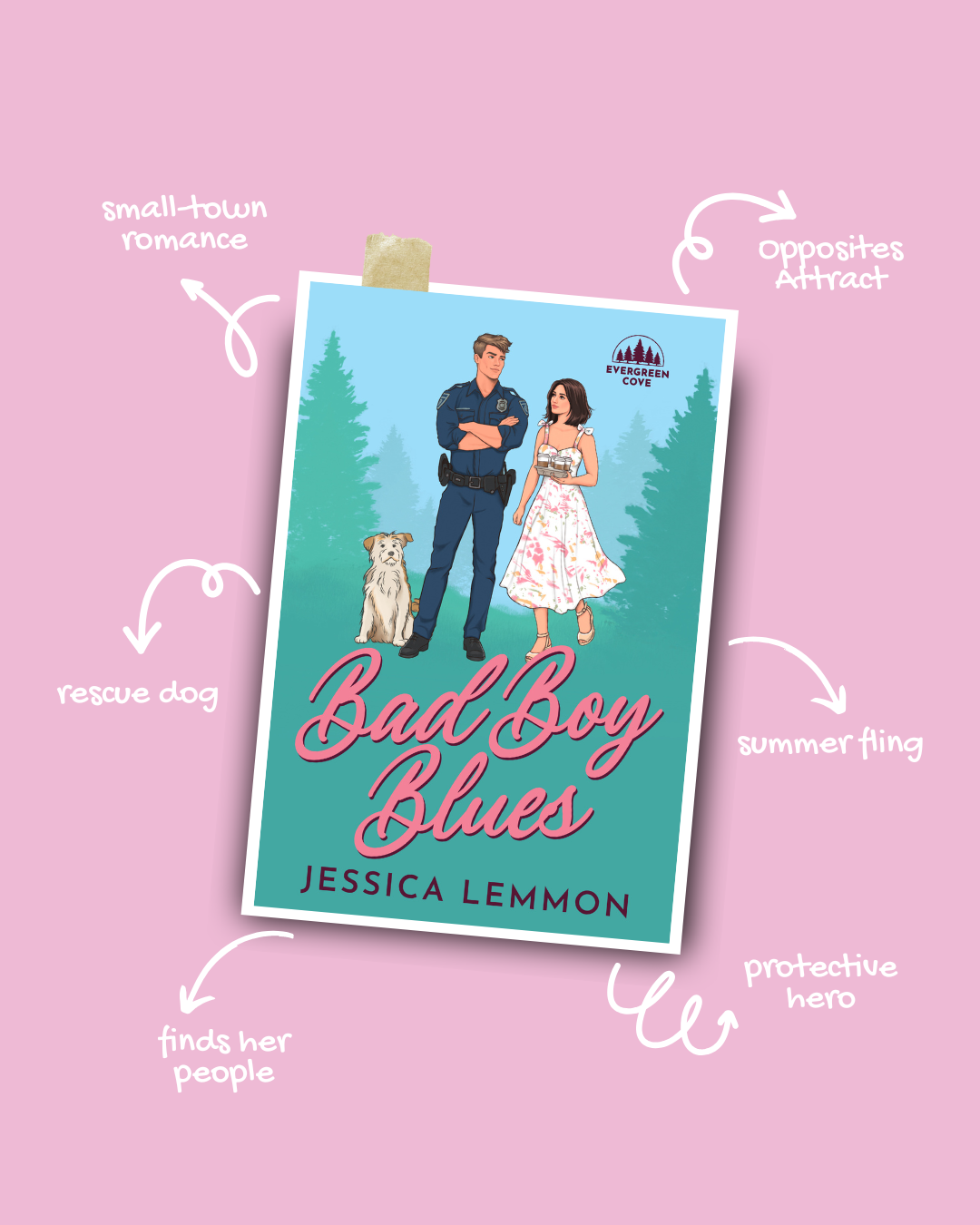
Beachy, summer fun is the name of the game for this hot cop and a woman on the run…
Cover Story by Jessica Lemmon:
How to Guard Your Writing Time

No lifeguard for your MS? No problem—I’ve got you.
How many times have you said, “You know what I have too much of? Uninterrupted chunks of time to write my book.”
That’s what I thought. 😂
Never.
Nor have I, my friend.
Between our day jobs, family time, doctor’s appointments, returning emails, running errands, caring for pets, and loading the dishwasher, chunks of free time are scarce, and scarce indeed.
To add to that, this month officially welcomes summertime in the States, which can make finding time to write even more challenging.
I live in a lake town where the sun glints off the water and music permeates the air on most days, beckoning me to lounge on the patio and do little else.
My old motto used to be “Work hard, Play hard” but nowadays I don’t want anything to be “hard,” so my new motto is more like “Work + Play = Yes, please.”
In the midst of all this summer jubilation, I am on deadline writing my next billionaire book. So, how do I guard the time it takes to write it without giving in to my inner sun-bum?
I’m sure you’ve heard this advice:
“Get up an hour earlier, stay up an hour later, sacrifice your evening television.”
And if you’re a mom, you also might have heard that you should write in the car in the pickup line or hide in your walk-in closet.
While practical, these life hacks tend to fall short because like…what if I don’t want to write in my closet at 5 a.m.? 🥸
Getting up early sounds horrible to me. Staying up late is ineffectual since I don’t enjoy creating after dark, and sitting in a closet is not the writing life I dreamed of when I created my vision board.
So yes, I could force myself into a schedule that leaves me cranky, tired, and resentful.
At the end of the day, I’d have a finished book.
But what if I want it all?
The satisfaction of writing in an easy, flowy manner, without sacrificing what I love.
Does it exist? 🦄
As a romance author, I cannot stand when women don’t get to have it all, so you’d better believe I’m not going to punish myself for the sake of the work.
(At least not anymore. I talk about burnout in several of my blog posts if you want to check them out HERE.)
I want to write the book. I also want to enjoy my life.
I want the pages and the boat time.
The satisfaction of finishing my work and the rewards that follow.
Which means the answer isn’t “squeeze writing into the least pleasant corners of the day and hope for the best.”
The answer is to make writing your number-one priority—whether you do it first or not.
Priority #1: Write the Book
A priority doesn’t have to be the thing you do first, which may come as a relief to you night owls.
When we don’t schedule our writing, it haunts us the entire day.
While we are at the grocery store or gardening or writing a magazine article…😬).
It’s this nagging sensation that you should be doing something other than what you are doing.
Tell me if this sounds familiar: you sit down to write, but you decide to return an email “real quick.” Before you know it that email has taken you on a sidequest that has gobbled up an hour, or even two. 🫣
Now you can add guilt and shame to your list of things to do, because you didn't honor what you should have done before you did those other things… which also needed to be done.
Tricky.
And listen, I’m not going to tell you how to live your life, because if you know that you can return an email and then hop directly into your writing, then I say go for it. But if you tend to meander before you roll up your sleeves and get to work, keep reading.
Since a book is typically written over a period of months or even a year, your attention is going to be required on a fairly consistent basis.
Especially if you hope to finish by your deadline, whether you gave it to yourself or an Editor gave it to you.
So, that means you need to chip away at it at smaller increments.
What will it be?
Twenty or thirty minutes at a time?
An hour of concentrated writing?
And which days of the week will you do it?
Weekdays only?
Weekends?
It doesn't really matter what you choose, but it does matter that you choose.
Choosing a Writing Window
This goes without saying, but let’s say it anyway:
Your writing block should be chosen with your actual life in mind.
To motivate yourself, be optimistic.
To set yourself up for success, be realistic.
Early morning might be perfect for you if you are in the 5 AM club. But if you work second shift and your brain turns on at midnight, that morning block is not going to work for you.
A 15-minute sprint during a lunch break could be a beautiful way to fit in writing if you can switch gears quickly, but not if you're someone who needs to immerse yourself in silence for an hour so that you can concentrate.
Rather than rely on one-size-fits-all writing advice, choose what works best for you. Take into consideration your day job, your leisure time, and how long it takes you to write your word count goal for the day.
Plan accordingly.
Make That Hour Work for You
Now that you’ve carved out your ideal writing schedule, how can you make that block as productive as possible?
I’m so glad you asked. 😊
1) Your writing hour (or whatever amount of time you’ve designated) begins with your fingers on the keyboard.
This means you have to have your mise en place. If you don’t watch cooking shows, this French culinary term means everything in its place.
Fill up your water bottle, gather your supplies (I always have a notebook and a pen), turn your laptop or phone on silent, or play some music if that’s your thing.
Now you’re ready to write.
2) Set a goal
“Write” is obviously the goal, but what if you don’t know what happens next in your story?
The top of your hour might need to be dedicated to rereading yesterday’s words so that you know where you left off. Or you may need to review your synopsis.
Be honest with yourself about what you’ll accomplish in that hour.
If quick-editing your chapter and writing 2,000 words isn’t possible, don’t make it your goal.
3) Take breaks
Even a brief five-minute break after each half-hour makes a world of difference.
Stand up, or if you’re at a stand-up desk, sit down. Stretch. Go to the bathroom. Drink water.
If you want to scroll social or check your email, be careful. ⚠️
Those tasks tend to bleed into the next writing block and throw you off track.
Measure Your Progress
Word count seems like an obvious metric, and most days it’s mine. I love nothing more than writing my word count on my planner and then patting myself on the back for a job well done.
But, sometimes there’s more to it.
If you deleted 200 words you wrote yesterday, or had to go back a few chapters to refresh your memory, then you might have missed your word count goal for the day.
Which isn’t a bad thing if you are improving your book, right?
But we still have that darn deadline to contend with…
If you find yourself in this predicament, you have two choices:
a) You can increase your word goal for the next writing day
or
b) You can hustle out the word count you need for this one
Again, this is where you have to be honest with yourself.
If you needed 1,000 words this session to meet your goal and it’s not realistic to add them to your word count tomorrow, then where can you rearrange your schedule to write those missing words?

Relaxation comes easier after you hit your goal.
a) Can you dictate them (sloppy, but effective)?
b) Can you add an hour to your scheduled block?
c) Can you add a writing day to the end of your week?
It doesn’t matter how you make it happen, but in order to hit your deadline, you will need to make it happen.
Guarding your writing time isn’t about turning your life into a military operation.
And it’s not about pushing yourself so hard that you sacrifice the fun part of your life.
Guarding, in this case, is less soldier, more lifeguard.
We’re in essence saving our writing time…usually from ourselves. 😅
That means making the time to sit and concentrate on our characters and our plot, preparing for that sacred hour (or two) ahead of time, and being honest about when we’re done for the day. Acknowledging what we have accomplished—or haven’t.
Which isn’t about self-flagellation, but instead about giving ourselves the space to do our job and do it well—without sacrificing every spare moment worrying about it.
Because even when the writing is “done”, it usually isn’t.
There are always more words, more revisions, more edits…
When prioritizing, pour all your focus into that writing block you’ve cordoned off, but not as a punishment—think of it as an act of kindness for yourself.
A personal note…
Last week I had a 10,000-word goal for the week.
By the time Saturday rolled around, I was short about 2,500 words.
On the same day I was expecting eight friends to arrive and join me for a party at the lake.
I knew to hit this goal, I’d have to let everything go except for the words.
Because of that focus, I did it. I wrote 2,700 words to hit my 10k goal for the week!
I was elated. But I’d only left two hours to get everything ready for the party…including myself. 🫨
And yet, everything got done.
Had I spent all day cleaning and prepping, I would have done everything except write.
And then I wouldn't have hit my goal.
That’s what we do most of the time. We prioritize stuff that isn’t actually a priority.
Do you have to go to the store? Vacuum? Set up everything perfectly before your party? What if instead you…
Have the groceries delivered
Let the robot vacuum clean the rug
Allow the friends who are coming to help set out the food
I ended up enjoying my entire weekend because I could relax knowing that I hit my quota for the week.
And when you feel that good after a writing sesh, you’re practically guaranteed to return to your desk for the next one.
This is where we have picked up inside the Lemmon Society. I’m sharing my 7 Tricks to a 2,000-word day (it takes less time than you think!), and I am logging my own wins and losses in the Writing Lounge.
Why? Because I am committed to finishing the book. If you’re ready to commit (or recommit!) to your manuscript, join us in the community.
You don’t have a bunch of problems. You have one: You need a space that helps you make writing a habit.
Because when habits happen routinely and automatically, we finish our books, get published, and make money as bestsellers.
I want that for you.
If you do, too, step inside.
♡
Jessica Lemmon is a former job-hopper who resides in Ohio with her husband and rescue dogs. She holds a degree in graphic design currently gathering dust in an impressive frame. When she’s not writing emotionally-charged stories, she spends her time drawing, drinking coffee, and laughing with friends. Her motto is Read for Fun, and she believes we should all do more of what makes us happy. Learn more here.
Come write with us…
Show up as the writer you know you can be in the Lemmon Society Membership.
Whether burnout has you licking your wounds, or you’re putting off writing no matter what you do, it’s time to give yourself the support you need.
As of June 2026, here’s what’s inside:
22 audio Pep Talks
14 Zoom replays
28 Story Notes posts
27 resources inside The Drop, including audios, prompts, posts, and video tarot readings
My 47-minute workshop: Human Being vs. Human Doing
With new content being added each and every week.
Jump in wherever feels best for you, in order, out of order, you decide.
The point is not to do everything.
The point is to cherrypick what you need for your writing practice.
I’ll be by your side the entire way.
Join today and…
Let’s write.

You're too busy to give your next book idea the space to grow. Writing groups have left you feeling drained by the complaints and industry doom, and you're still looking for advice you can trust. I see you. There's a difference between wanting to write a book and becoming the woman who does. Every Wednesday, we write together in a sunny, negativity-free space, with monthly card pulls and a live gathering where you can ask me anything. Writing is supposed to be fun, and inside TLS, it is. 🍋
A peek at what’s coming this month for members
Story Notes
My 7 Tricks to 2,000 words is a delight. I’m sharing photos of my planner and my notebook, too. This is the ultimate behind-the-scenes for writers.
Creative Inspiration
Learn how to maximize your word count no matter what. We’re not white-knuckling it. We’re going to be in flow.
Pep Talks
Grab my latest audio: How to Maximize Your Word Count Even if You Don’t Wanna.
Plus gain access to the 47-minute workshop perfect for avoiding or healing from burnout called: Human Being vs. Human Doing: Ease Over Exhaustion.
Live Calls
Our live Zoom convo is where we dive into mindset alongside writing and author life tips. This is your chance to share where you are in the journey in person.